










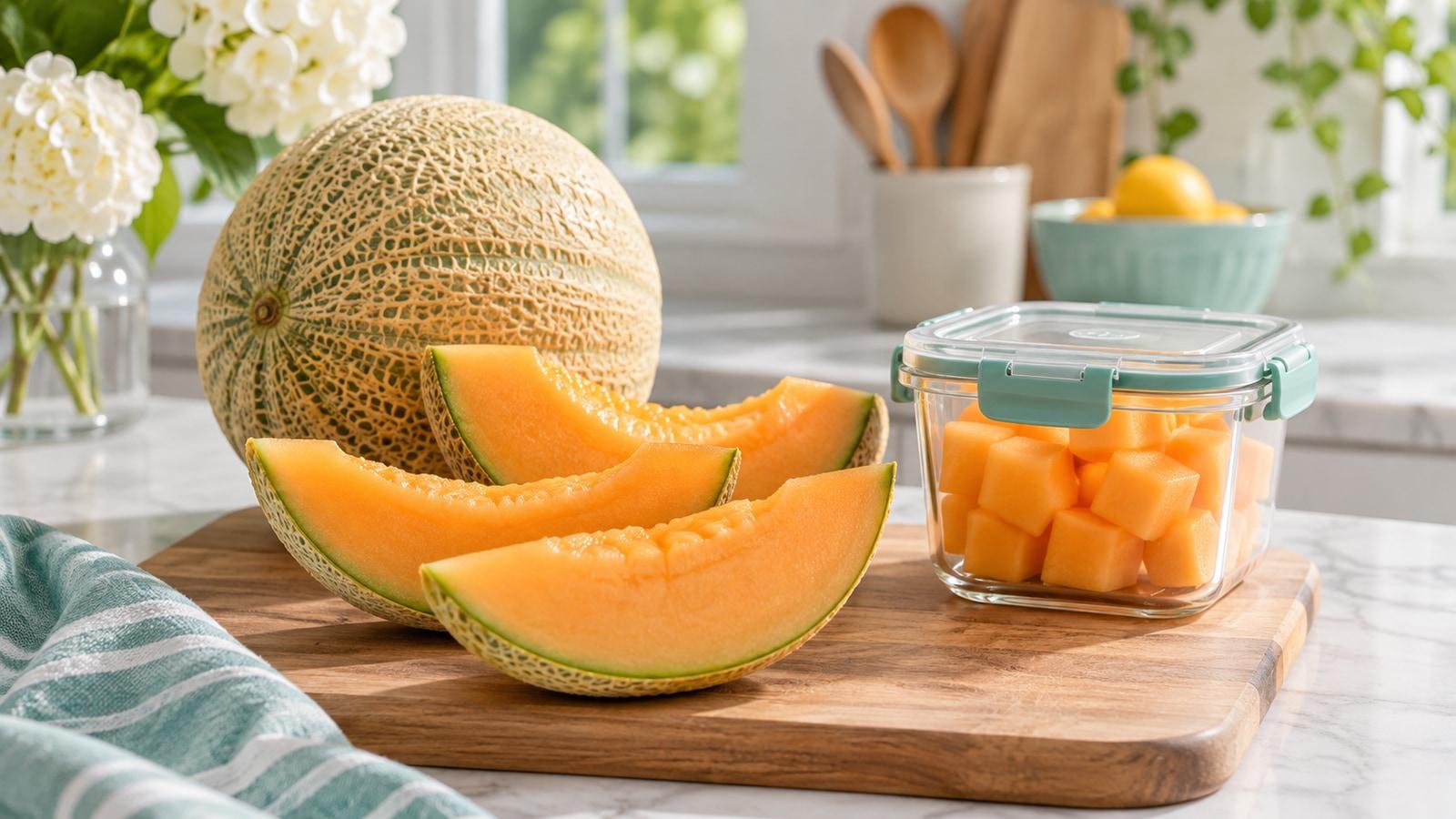
A whole melon can look like a bargain until you get home, cut it open and discover you have more fruit than refrigerator space. Buying one doesn't have to mean eating the same giant bowl all week. A little planning at the store makes it easier to enjoy the fruit while it's fresh.
Here is how to choose between a whole melon and a cut container, get it ready safely, and make a plan for the portions you won't eat today.
Whole melon or already cut?
Start with the size of your household and what you have time to prepare. A whole watermelon or cantaloupe may cost less per pound, but part of that weight is rind. If cutting a large fruit is difficult, a smaller melon or a refrigerated container of cut fruit may be more practical even when its price per pound is higher.
Think about how much cold space you have before you shop. A large half watermelon can take over a shelf. Several smaller covered containers may fit better, but you'll need room for those too.
If buying pieces that have already been cut, choose a package kept refrigerated or on ice at the store. Check the package date and any storage directions. Pick it up near the end of the trip so it spends less time in a warm cart or car. Our guide to pre-cut produce looks more broadly at cost, convenience and waste.
Look at the outside first
Choose whole fruit without obvious cracks, leaking areas, mold or decay. A melon with a damaged rind may be difficult to assess once you get it home. If the only options look questionable, choosing another fruit is a perfectly good decision.
Different melons have different shapes, colors and aromas, and no single squeeze or thump tells you everything. Ask someone in the produce department what to look for in the variety they sell, especially if you plan to eat it soon.
Flavor and safety are separate questions. A pleasant smell doesn't prove that cut fruit has been kept cold, and washing can't make spoiled produce safe. If you don't know how a container of cut melon was stored, don't taste a piece to test it.
Wash before the knife goes in
Even though you won't eat the rind, the knife passes through it on its way to the fruit. Begin with clean hands, a clean board and a clean knife. Rinse the outside of the whole melon under running water and scrub the firm rind with a clean produce brush. Dry it with a clean towel or paper towel before cutting.
Use plain water, not soap, detergent or a produce wash. Washing helps remove dirt and can reduce bacteria, but it cannot guarantee that every germ is gone.
Keep the melon and its utensils separate from raw meat, poultry and seafood. If the board was used for raw meat, wash it thoroughly with hot, soapy water before preparing fruit that will be eaten raw.
Cut an amount that fits your week
Place the melon on a stable cutting board. If it rolls, create a flat surface carefully before making larger cuts. A damp cloth under the board may help stop the board from sliding. Use a knife you can control comfortably; a very large melon isn't worth wrestling with when a smaller one or a cut option would work.
For a seeded melon, scoop out the seeds after cutting it open. Slice away the rind, then cut the flesh into pieces that suit how you plan to serve it. A few wedges might be right for a shared lunch, while small cubes fit easily into covered containers.
If standing, gripping a knife or lifting a heavy melon is difficult, ask someone to help or buy a cold, ready-cut package. You don't have to prepare every food from scratch for it to be useful.
Put the extra fruit away promptly
Refrigerate cut melon in a clean, covered container at 40°F or colder. Do this within two hours of cutting or serving, or within one hour if the temperature is above 90°F. A picnic table and a hot car count too; use an insulated cooler with ice packs when you need to carry the fruit.
Write the cutting date on the container. Use the fruit while it is fresh and follow any earlier date on a purchased package. Discard cut melon that has been refrigerated for more than a week, or that sat out beyond the safe time. If you're unsure how long it was left out, don't rely on its smell or appearance to make the decision.
For a gathering, put out a modest bowl and keep the rest chilled. You can bring out more as people want it. That keeps a large tray from spending the entire afternoon on the table.
Give it a few different roles
Melon can be a cool side at breakfast, part of a fruit bowl or something to bring to lunch. Try it with plain yogurt or cottage cheese if you enjoy them, or alongside toast and eggs. Those are ideas rather than a required combination; choose around allergies and what sounds appealing.
If your appetite is quieter while taking a GLP-1, start with an amount that feels comfortable and keep more available for later. You can also serve the fruit alongside other foods instead of expecting it to be the whole meal.
Whole fruit isn't the only convenient option. Our guide to fresh, frozen and canned fruit can help you choose what fits your schedule. The best purchase may be a small melon, a refrigerated cup or a different fruit you know you'll finish.