










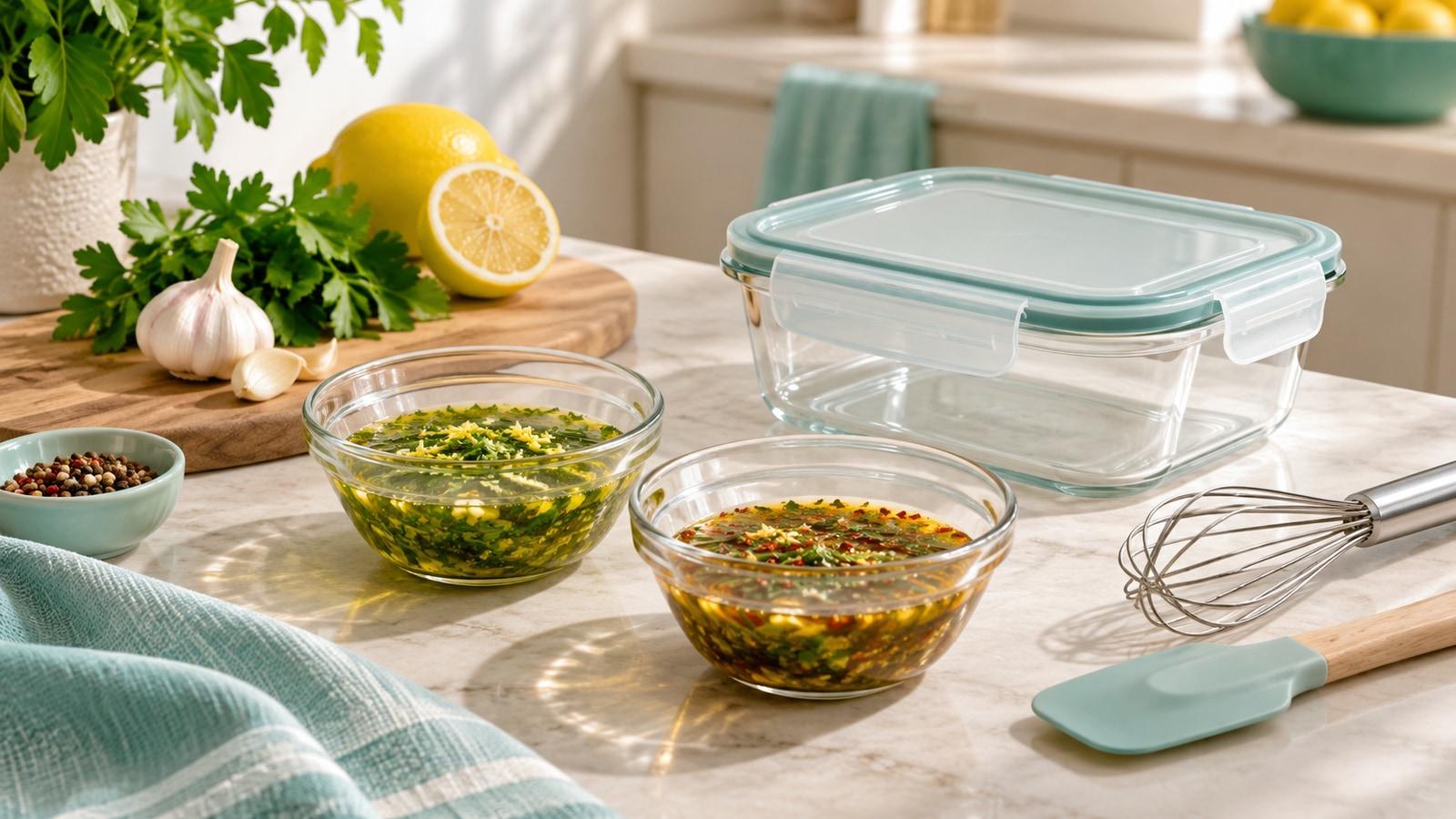
Marinating chicken can add flavor before dinner starts cooking. The part that's easy to miss is deciding which sauce will touch the raw chicken and which sauce you want to put on the table.
Make that decision first and the rest is simpler: reserve a clean portion, keep the chicken cold while it marinates, and use a thermometer when it's time to cook.
Decide what you want the marinade to do
A marinade can be as simple as olive oil, herbs, and lemon, or it can start with plain yogurt and spices. A bottled dressing can work too; check the label for ingredients, allergens, and storage instructions.
Think about the finished meal. Lemon and herbs might suit chicken served with vegetables. Yogurt and a little cumin make a different coating. If strong flavors don't appeal, use a milder combination or leave the sauce on the side.
A marinade mainly adds flavor to the surface; it isn't a substitute for cooking chicken properly. The texture can change depending on the ingredients and how long the chicken sits, so start with a recipe's timing and adjust for taste in a future meal.
If you like having sauce with the cooked chicken, mix a little extra in a clean bowl. Pour the amount you want for serving into a separate covered container before the raw chicken goes anywhere near the rest. Refrigerate the reserved portion.
Check the calendar before mixing
Keep raw chicken refrigerated at 40°F or below. Plan to cook or freeze raw chicken within one to two days of purchase, taking account of how long it has already been in your refrigerator. Adding a marinade does not restart that clock.
If dinner plans change, don't leave the bowl on the counter while you decide what to do. Return it to the refrigerator promptly. If you won't be able to cook it within the safe window, make a plan to freeze it while it is still within that window.
Frozen chicken can be thawed in the refrigerator. Put it in a container on a lower shelf so any juices stay away from food that won't be cooked. Allow enough time for it to thaw rather than leaving it out overnight.
Keep raw chicken and the rest of dinner apart
Prepare any salad, herbs, or side dishes first, then cover and refrigerate them if they are perishable. Use a separate board and utensils for the chicken, or wash equipment thoroughly with hot, soapy water between tasks.
Don't rinse raw chicken. Water can splash raw poultry juices around the sink and nearby surfaces. Open the package carefully, put the chicken directly into its container, and wash your hands and any surfaces that touched the packaging or juices.
Use a covered food-safe container or a sealed bag set inside a dish in case it leaks. Turn the chicken with a utensil used only for the raw food. Place the container in the refrigerator, away from ready-to-eat items.
Set a reminder for when you plan to cook. A short marinade can still add flavor; a longer one isn't automatically better, especially if the recipe contains a lot of acid.
The serving sauce needs its own spoon
The reserved sauce is the portion you separated before it touched raw chicken or a utensil used with it. Keep it covered and cold until the meal is ready. Put out a clean spoon so people can add it to their plates.
Discard the marinade left in the raw-chicken container. Don't use it as a finishing drizzle or put the cooked chicken back on the same plate. A clean serving dish is an easy way to keep track of which utensils and surfaces are ready for cooked food.
If a sauce contains yogurt, remember that milk is a common allergen. Bottled marinades may also contain soy, wheat, sesame, or other ingredients that matter to your table. Check the actual label and choose an alternative appropriate for anyone with an allergy.
Cook it through
Whether you bake, grill, or cook the chicken in a skillet, use a food thermometer. Poultry should reach 165°F in the thickest part. Check more than one piece if their sizes differ, and avoid touching a bone or the pan with the thermometer tip.
Browning is useful for flavor but can't tell you the center is safe. Pieces cut to a similar size are easier to cook evenly; a very small piece can dry out before a thick one is done. Transfer cooked chicken with clean tongs to a clean plate.
If you want more detail on checking different shapes and cuts, see our guide to using a food thermometer.
Make tomorrow's meal easier
Refrigerate cooked chicken promptly in a shallow covered container. Properly handled cooked chicken can generally be kept in the refrigerator for three to four days. Label it with the cooking date if you might forget.
When reheating leftovers, heat them to 165°F throughout. Our guide to keeping cooked chicken moist has ideas for the texture as well.
Chicken can be one protein option in a meal alongside vegetables and a side you enjoy. If a GLP-1 medicine has changed your appetite, reserve the sauce separately and choose the amount that sounds good. The marinade is there for flavor, not to make you follow a particular eating rule.